
Why your design hours blow out

How does a straightforward design end up eating so many hours? Sometimes a decision was missing from the brief. Sometimes the work was underestimated, changed along the way, or reached you without being checked.
You prepared the brief. It felt like a regular job, and the designer got straight onto it. Then the first version comes back, and it's not quite what you pictured. You send feedback, it shifts but drifts, another round, still not there, and now the due date is in the corner of every email. And the hours keep going.
The blowout lands as hours first: rounds you didn't plan for, then the deadline they push, then the cost that follows. By the time the hours are gone, the cause can be hard to trace.
The briefs that bleed hours
After years of running design production, these are the patterns I see again and again. They're the conditions a brief carries in with it. Some can be resolved before work starts. Others need to be flagged as soon as the job changes.
| What slips in | Why it blows out | Settle before work starts |
|---|---|---|
| No approved copy at briefing | When the copy changes after the design is underway, the layout and hierarchy built around it fall out of context, and often the only fix is a redo. | Confirm which copy is final and what can still change. |
| The unmade decision ("we'll let you explore") | Sounds like creative freedom. With no target agreed, every round is a guess for them to react against, and exploration gets billed as production. | Agree the goal, supplied direction and room for exploration. |
| Feedback pulls in different directions | When several people give direction, the designer is left reconciling contradictory opinions instead of following one. The original intent dilutes until the design belongs to nobody, and getting it back usually means starting over. | Name one person to resolve conflicting feedback. |
| A stakeholder joins mid-project | New voices bring new directions. Minor technical input is fine. A directional change from someone who wasn't at the brief restarts the work done before them. | Identify required approvers before the first draft. |
| The direction goes unsaid | Because you've worked together a while, the brief assumes the designer already knows the creative direction, so it goes unsaid. They fill the unsaid part with a guess, and the guess surfaces as rework once it's too late. | Confirm what carries over from previous work and what is new. |
| Contradicting references | Each reference looks good alone, but some pull against each other. Nobody has resolved which one wins, so the designer ends up guessing at a direction that was never actually agreed. | Say what to take from each reference and which takes priority. |
The 15-minute jobs that aren't
Some jobs look small from the outside, and if you're not the one designing, there's no reason you'd know otherwise. These are the ones that make people wonder why it's taking so long, with the designer's logic behind each. These jobs aren't necessarily inefficient. The surprise comes when the estimate leaves out part of the work.
| What gets said | Why it takes time |
|---|---|
| "Same as last time but different" | Keep the structure, change the theme and content, and you're rebuilding most of the design while it looks like a tweak. |
| "Let's match what that company does" | Matching to a degree is fine. The trap is that nobody has agreed on the degree. "Like theirs but ours" can mean borrow the vibe or sit right next to it, and until that gauge is set, every round is the designer guessing how far to go. |
| "Can we try a different direction?" | A new direction means a new idea, explored and developed from scratch, rather than an adjustment to what's already there. |
| "Can we see a few options?" | Distinct concepts need separate development. Smaller variations can reuse the same design, but each still needs to be checked. Agree what "options" means before the work is estimated. |
| "Everything you need is in the attached doc" | Reading and absorbing someone else's documentation to work out the right approach is real time, spent before any design starts. |
| "Just update the file from last time" | If an inherited file has missing fonts, broken links or an unclear structure, the designer needs to check what can be reused before estimating the update. |
| "It's basically done, just needs a few tweaks" | Some tweaks are quick. But one that shifts the layout or composition ripples out: every other size and file built off it has to be reworked to match. |
| "Can you just update the copy on all 12 sizes?" | Templates and linked content can speed up the change, but each size still needs checking for text fit and layout before export. The time depends on how the files were built. |
The work nobody checked before you
Some hours don't blow out in the making. They blow out at your desk, because the file arrived with you as the first and only checker.
A missed brand colour, copy that doesn't match the doc you sent, an export at the wrong size. None of it is hard to fix. But when there's no checking layer between the designer and you, every one of those catches becomes your job: spotting it, writing it up, waiting for the corrected file, checking again. The design took its estimated hours. The checking loop took yours.
The tell is how you feel opening a delivery. If your first move is a careful inspection because things slip through, you've become part of the production line, doing quality control that was never priced into anyone's time, least of all yours.
The designer should check their own work before submitting it. A separate check against the brief, brand guidelines and file requirements adds another safeguard before it reaches you. Your review should be about whether the work does its job, not whether it followed the brief.
The work needs the right experience and support
If a job needs judgement the designer hasn't developed yet, someone has to provide it. Without that support inside the design team, the explaining and correcting can land on you.
For routine work, ask how the provider uses approved templates and repeatable checks. For more complex work, ask who makes the design decisions and who reviews them. A job title alone won't tell you how much time you'll spend managing the work.
The trade you're making without knowing it
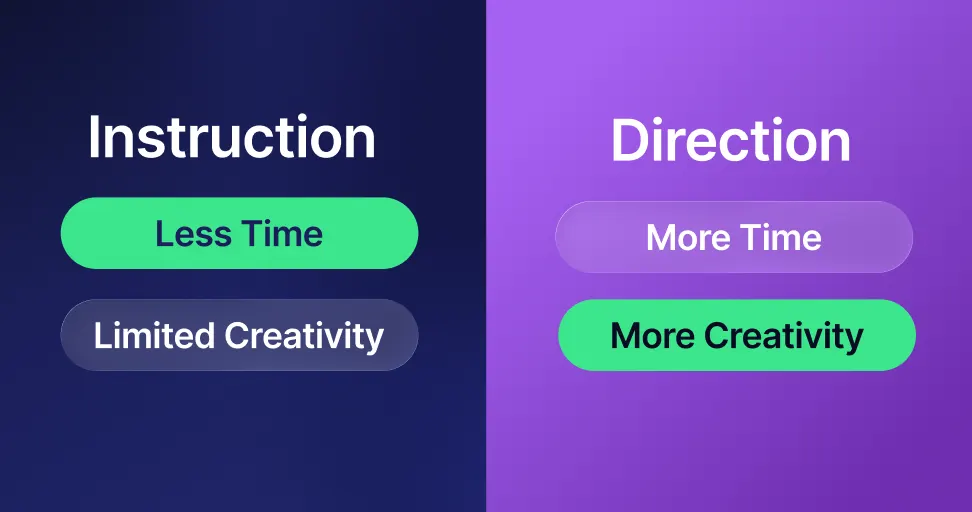
Plenty of the rows above come down to one mix-up: sending direction while expecting the speed of an instruction.
A brief can leave room for design judgement without leaving the goal undecided. Direction looks like this: "Use our approved copy and brand guidelines to make the appointment steps easy to follow." It gives the designer a clear job, with room to choose the layout. An instruction fixes more of those choices: "Use the approved leaflet template, replace the copy and keep the layout."
Both can be good briefs. Say what's fixed and where you want the designer's judgement, then agree how much exploration the estimate includes. The blowout comes from expecting a new layout or concept in the time allowed for a template update.
How to prevent design blowouts
You don't need to write a designer-ready brief on your own. Bring the purpose, content and brand direction. Before work starts, the design provider should help resolve what's missing and agree what the job includes.
Before your next brief goes, settle four things:
- Confirm what's ready. Identify the approved copy, assets and direction, and agree what is still provisional.
- Name the final approver. Gather the right stakeholders early and resolve conflicting feedback before sending it back.
- Agree where judgement is needed. Say which choices are fixed and which the designer should explore.
- Agree the estimate and checks. Ask what the hours include, who checks the files, and how changes will be approved before more time is spent.
At Andelo, every brief gets a time estimate. Small jobs start straight away, and anything bigger waits for your approval. We ask before going beyond the agreed estimate, and our own errors are fixed without using your hours.
Use the free Design Brief Builder to organise the next brief you're about to send.
Stephen Andelo is the founder of Andelo. Andelo is a design subscription for Australian teams with steady design work. He writes about what actually works when there's more design work than your team can take on.